

JAHM’S DEBATES WITH THE SUMANIYYAH
Imām Ahmad (d. 241H) said in “ar-Radd alal-Jahmiyyah”📚 (page 93 onwards):
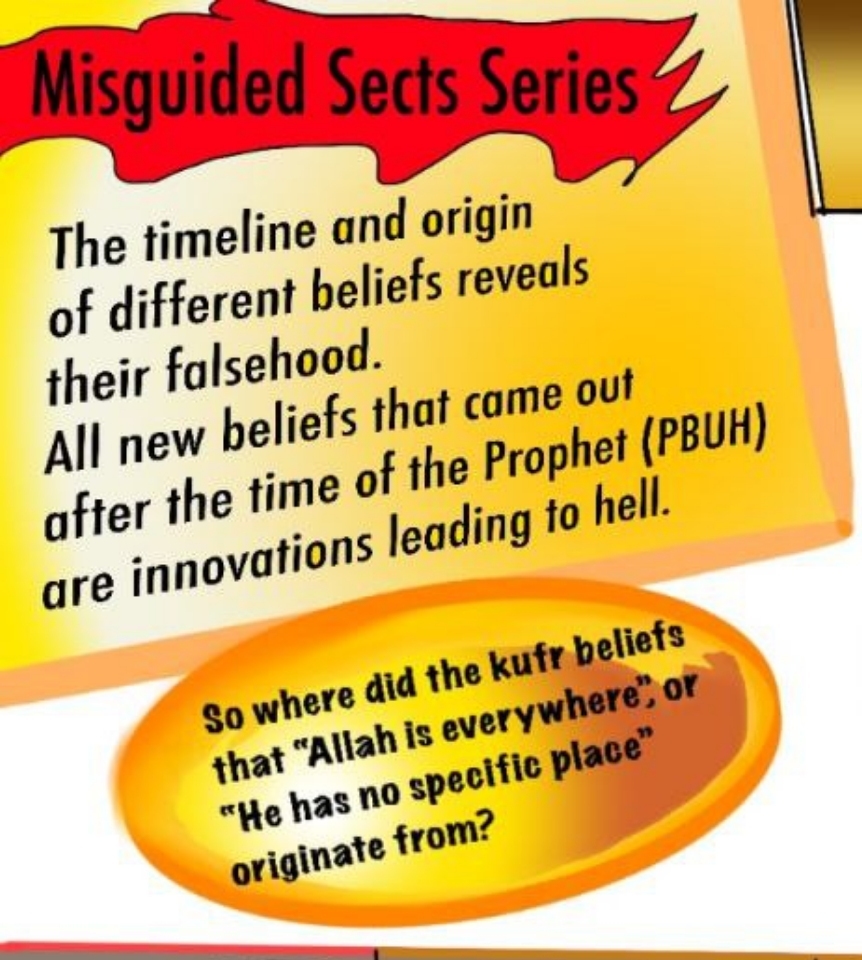
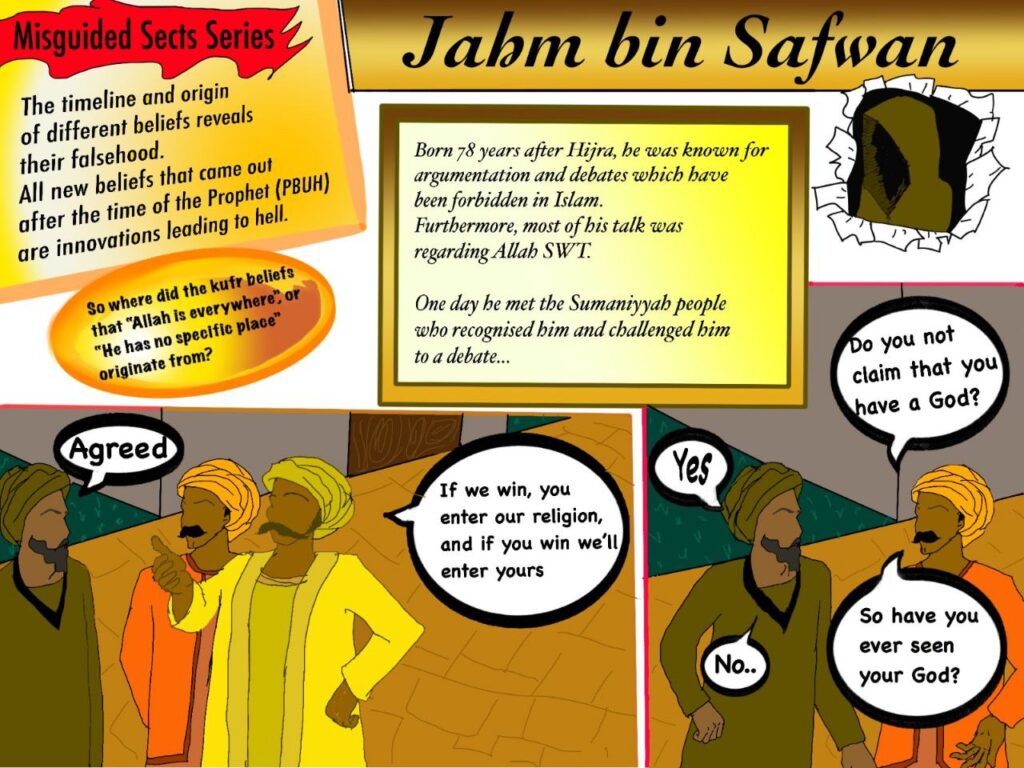
So, from what has reached us of the affair of Al-Jahm, the enemy of Allah, is that he was from the people of Khorasān, from the people of Tirmidh, and he was a person of much disputation and theological rhetoric (Kalām), and most of his theological rhetoric was regarding Allah…
So, he met a people amongst the disbelievers called the Sumaniyyah. So, they came to know Jahm and they said to him: “We will argue with you and if our proof overcomes you, you will enter our religion, and if your proof overcomes us, we will enter your religion”.
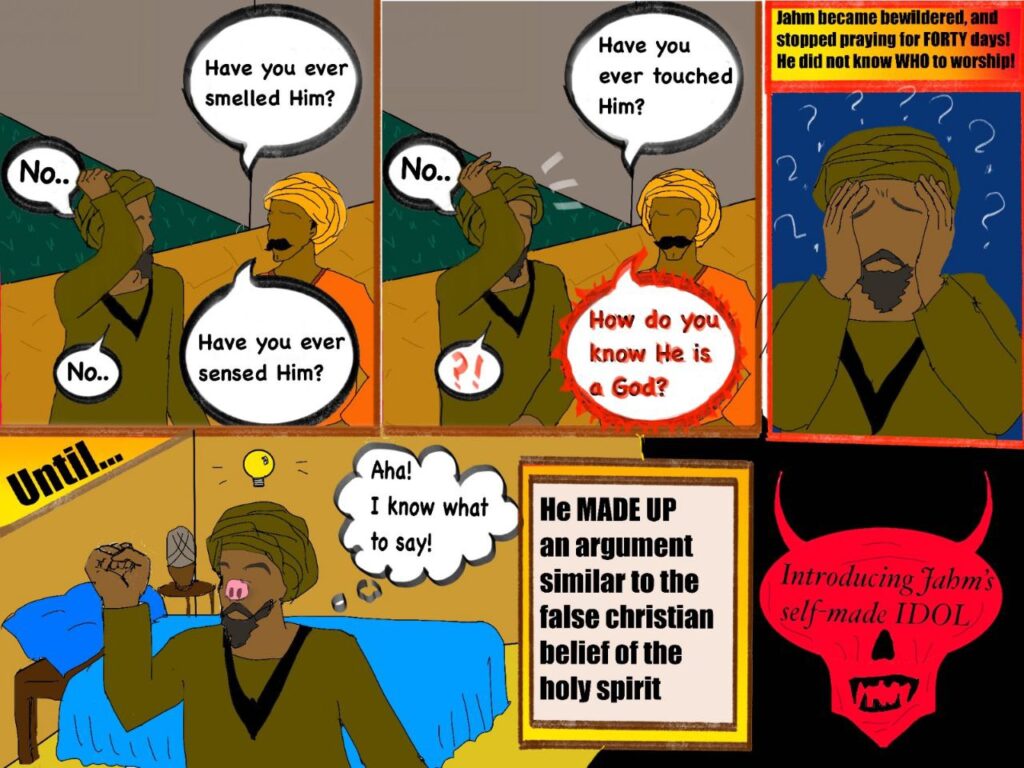
So, from the things that they spoke to Jahm about was that they said to him: “Do you not claim that you have an ilaah (deity)?” So, the Jahmī (i.e. al-Jahm) said, “Yes”. So, they said, “Have you seen your deity directly?” He said, “No.” They said, “Have you heard His speech?” He said, “No.” They said, “Have you smelt any fragrance of His?” He said, “No.” They said, “Have you been able to touch Him?” He said, “No.” They said, “Have you perceived him with any senses?” He said, “No.” They said to him: “So you don’t know that he is a deity?”
So Jahm became bewildered, and did not know what he was worshipping for forty-days. Then he redressed [this defeat by devising] a proof similar to the heretics of the Christians. The heretics of the Christians claim that the spirit that is within ‘Īsā (the son of Maryam) is the spirit (Rūh) of Allah, from Allah’s Essence. So, when He (Allah) wants to bring about something, He enters into some of His creation and speaks upon the tongue of that (created person), and thus He commands with whatever He wills and forbids with whatever He wills, but is a spirit that is absent from (the people’s) vision.
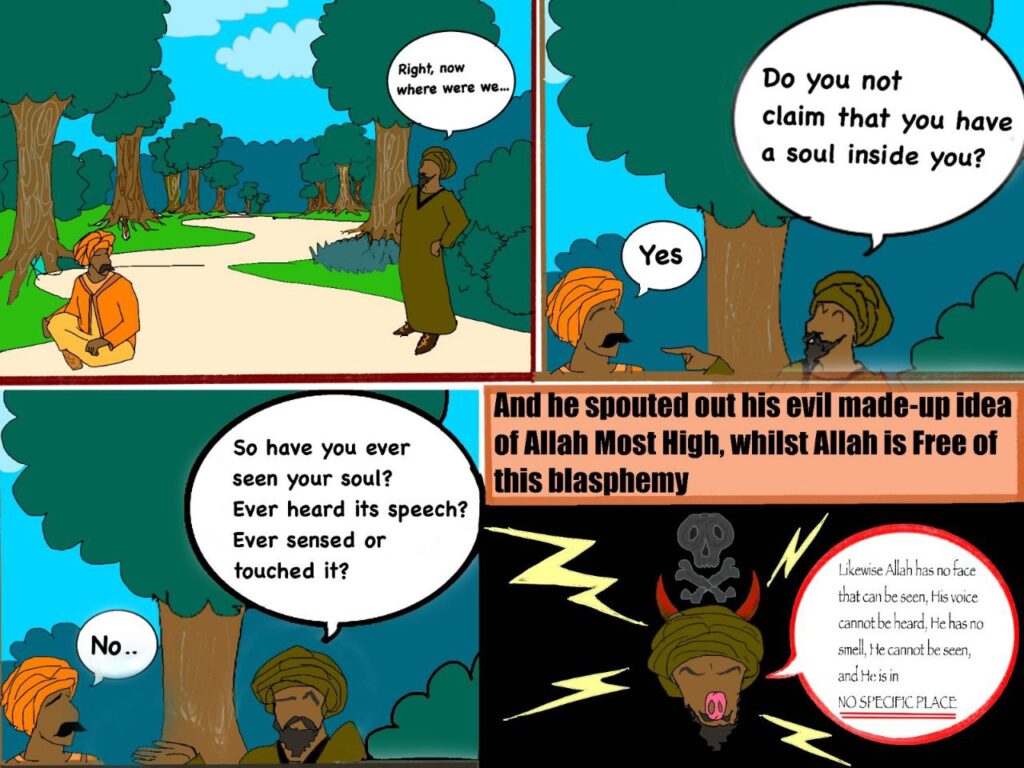
So Jahm devised a proof just like this one and so he said to the Sumaniyy: “Do you not claim that there is a spirit (i.e. soul) within you?” He said, “Yes.” He (Jahm) said: “Have you seen your spirit?” He said, “No.” He said: “Have you heard its speech?” He said, “No.” He said: “Have you perceived it with the senses or been able to touch it?” He said, “No.” So, he (Jahm) said: Thus, is Allah, He has no face that can be seen, and no voice that can be heard, and no fragrance that can be smelt, and He is absent from (the people’s) vision, and He is not in any one specific place exclusive to another…”
IMĀM AHMAD CONTINUES LATER (describing the kufr beliefs of the Jahmiyyah):
Thus, he instituted the religion of the Jahmis. And when people asked them about the verse, “There is nothing like unto Him…” (42:11), what is its explanation (Tafsir)? They would say: “There is nothing like unto Him…” from amongst the things. And He is beneath the seven earths as He is above the Throne, no place is devoid of Him, and He is not in any one specific place exclusive to another. He has not spoken and does not speak. He has not looked towards anyone in the world, and nor (will He) in the Hereafter. He is not described (with anything). He is not known by any attribute or any action. He has no limit or end (i.e. demarcation). He is not grasped by the intellect. He is the face of all of it (i.e. existence). He is the knowledge of all of it. He is the hearing of all of it. He is the seeing of all of it. He is the light of all of it. He is the power of all of it. He is not two things. He is not described by two different descriptions. He does not have a “highest” and a “lowest”, nor directions or sides, neither a right nor left, and neither is He light or heavy, and He does not have a color, or a body (jism) and nor is He known (ma’loom) or understood (ma’qool). And everything that you (imagine) in your heart which is considered a “thing”, then He is different to it.
[END QUOTE]
💥 Jahm and those who follow him in any of his beliefs in rejecting Allah’s Names and Attributes, are known as the “Jahmiyyah”.
💥 The Salaf had Ijmā‘ (consensus) that the Jahmiyyah are disbelievers, as reported by, Ibn Abi Hātim in Aqeedat ar-Rāziyayn (and other narrations).